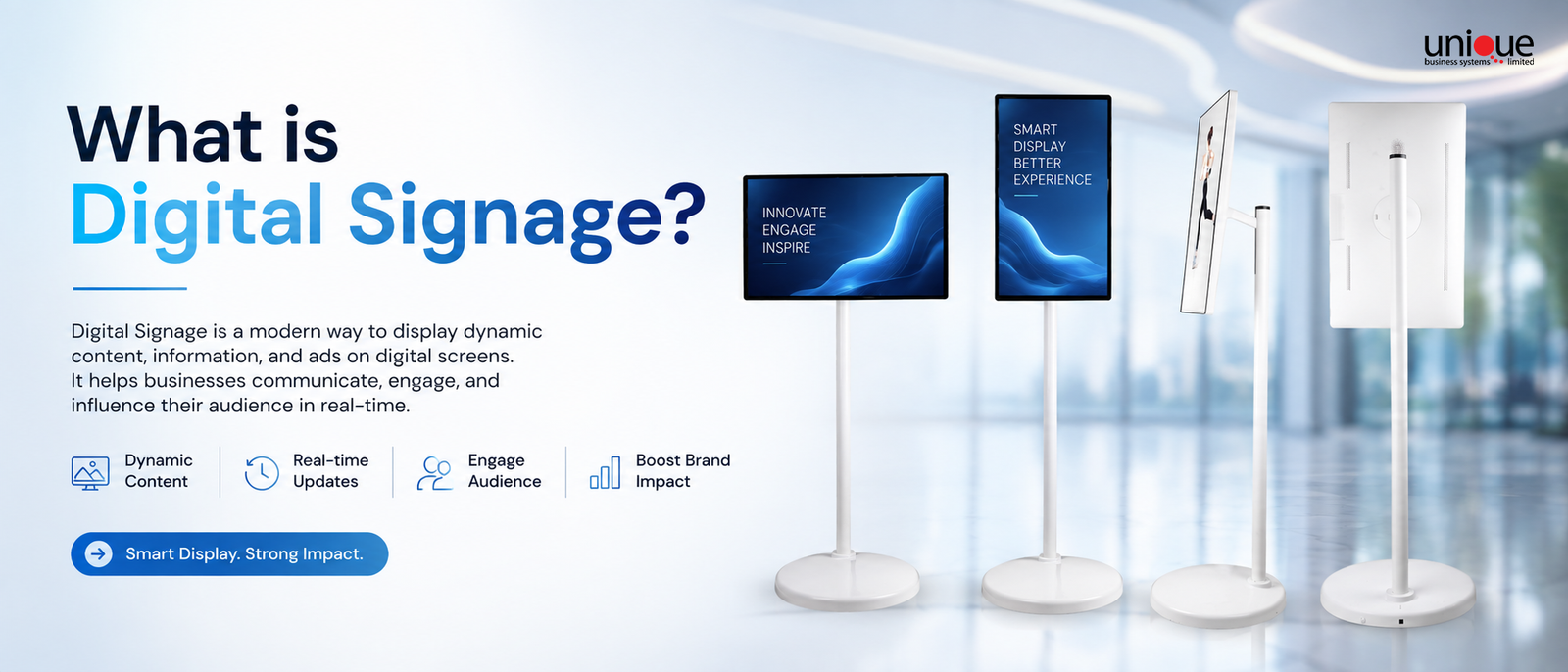
If you've been searching for a clear answer to "what is digital signage," this guide covers everything: how it works, its core benefits, real-world business applications, and what to consider when choosing a digital signage system for your organization.
Walk into any modern shopping mall, airport, hospital, or retail store, and you'll likely see screens displaying promotions, wayfinding information, or live content instead of printed posters. This is digital signage — and it's rapidly replacing traditional static signs as the go-to communication tool for businesses of every size.
What is Digital Signage?
Signage meaning, in its simplest form, refers to any visual display used to communicate information — traditionally through printed boards, banners, or posters. Digital signage takes that same concept and delivers it through an electronic display board instead: a screen connected to a media player and managed through software, allowing content to be updated instantly, remotely, and dynamically.
Unlike static signs, digital signage can show video, animated graphics, live data feeds, and scheduled content — all controlled centrally through a content management system (CMS). This makes it a powerful digital communication platform for businesses that need to update messaging quickly without reprinting materials every time.
In short, digital signage combines hardware (the commercial display screen), software (the CMS), and content (images, video, or live feeds) into a single, connected system.
How Does Digital Signage Work?
A typical digital signage display setup includes three core components:
- Display Hardware — The physical screen, ranging from small indoor panels to large outdoor digital advertising displays, including LED, LCD, and touch-enabled options.
- Media Player — A small device (often built into the screen) that stores and plays content, receiving updates from the CMS.
- Content Management Software — The platform used to design, schedule, and push content to one or multiple screens remotely, often from a single dashboard.
Once set up, businesses can update pricing, promotions, or announcements across an entire network of screens in seconds — something that would take hours or days with printed signage.
Types of Digital Signage
Standard Digital Signage Displays
Used purely for one-way communication — displaying promotions, news, or information without user interaction.
Interactive Digital Signage
Equipped with touchscreens, interactive digital signage allows users to browse menus, check directories, or explore product catalogs directly on the screen — turning passive viewing into active engagement.
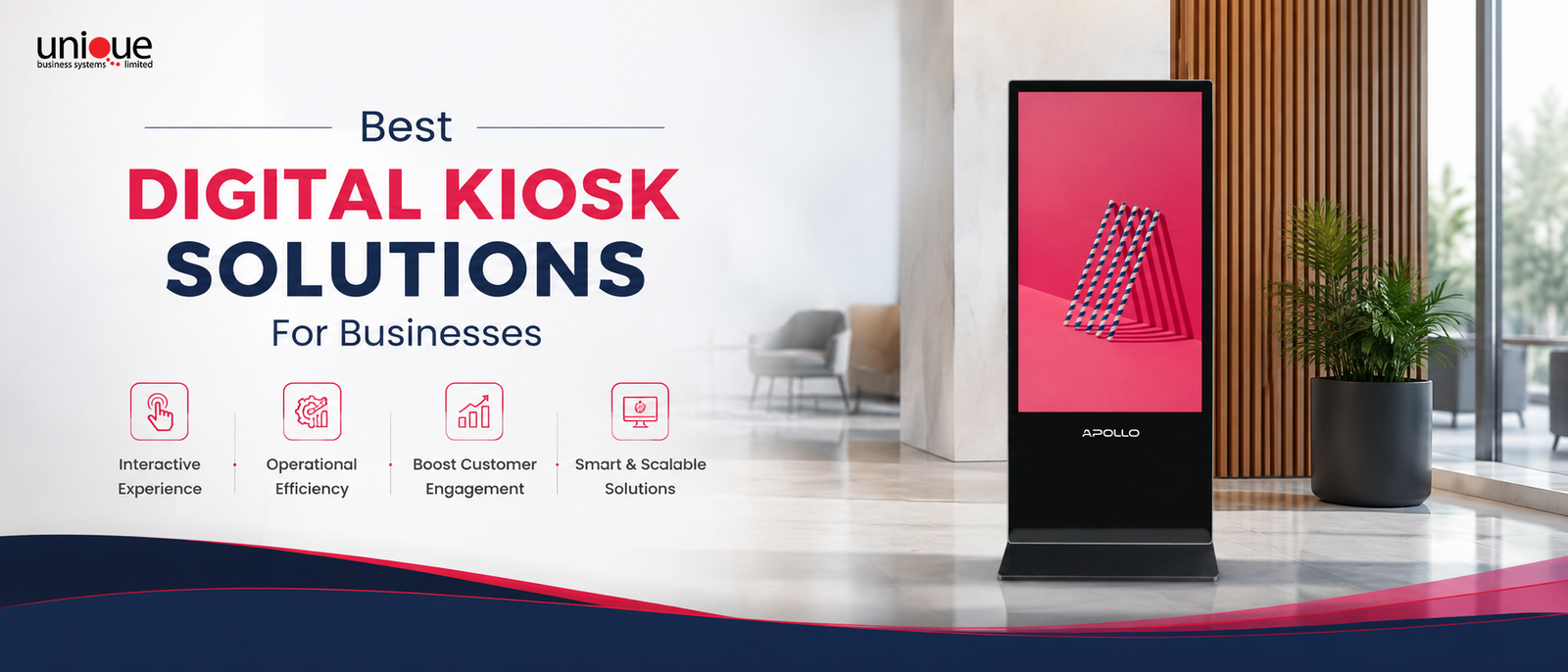
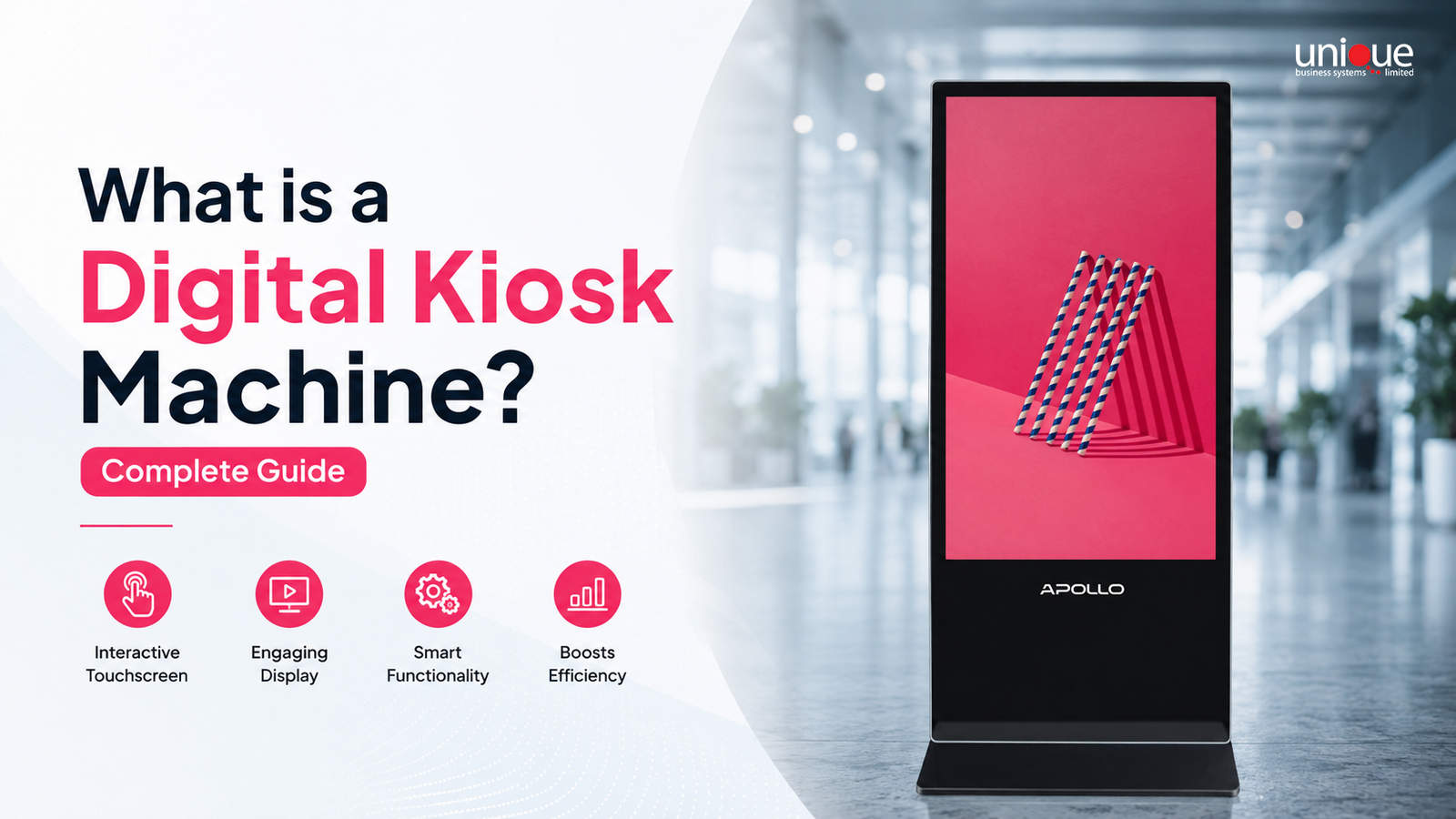
Digital Signage Kiosks
A hybrid of signage and self-service technology, these standalone units combine digital display solutions with functional touch interfaces for wayfinding, ordering, or check-in.
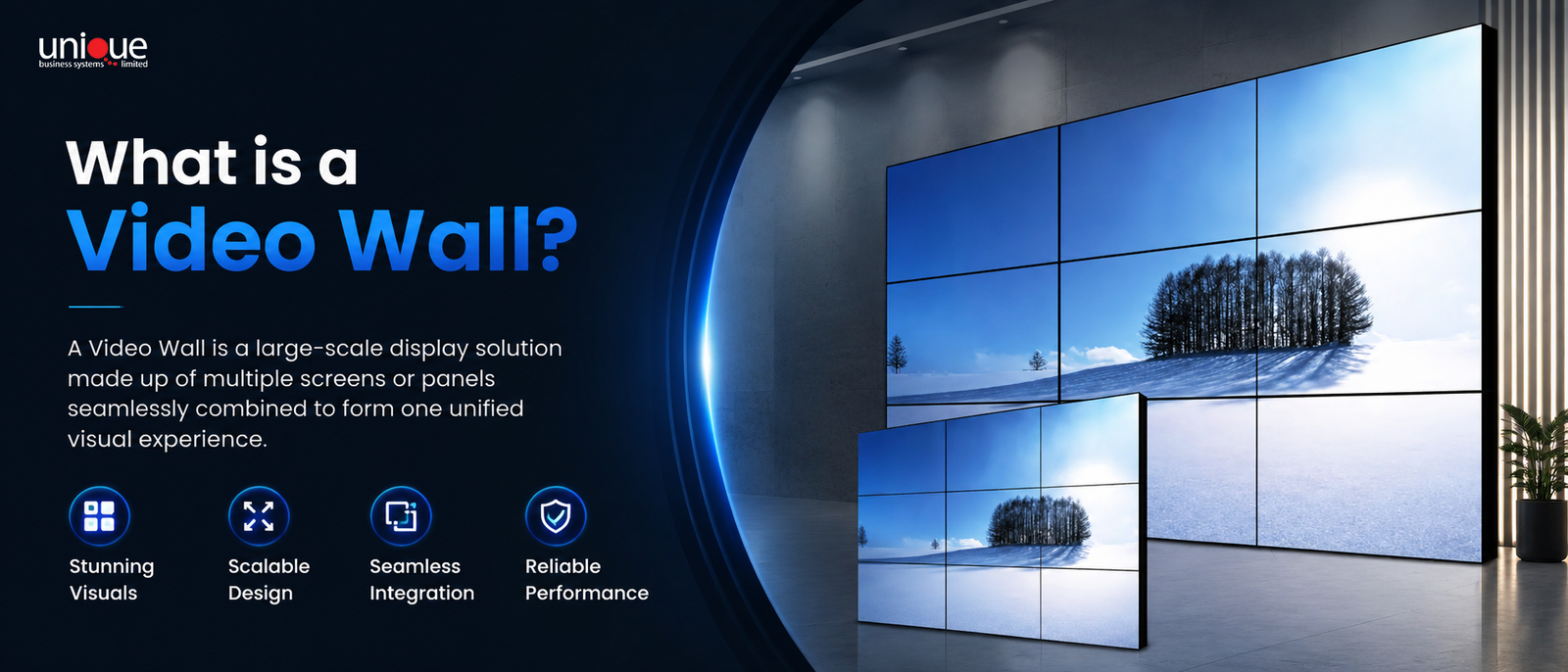
Video Walls
Multiple screens combined into one large digital information display, commonly used in corporate lobbies, control rooms, or high-impact retail environments.
Outdoor Digital Signage
Weatherproof, high-brightness displays designed for outdoor visibility — often used for billboards, transit stations, and building facades.
Benefits of Digital Signage for Businesses
1. Instant Content Updates
With traditional signage, changing a message means reprinting and physically replacing materials. Digital signage lets businesses update content instantly — from a single screen or across hundreds of locations — through the CMS.
2. Higher Engagement
Motion, video, and dynamic visuals naturally draw more attention than static posters. Businesses using smart signage solutions often see stronger customer engagement simply because moving content is more noticeable than printed material.
3. Cost Savings Over Time
While the upfront investment is higher than printed signs, digital signage eliminates recurring printing, shipping, and installation costs — making it more cost-effective over the long run, especially for businesses with frequently changing content.
4. Centralized, Remote Control
A content management system allows businesses to manage messaging across multiple locations from one place, ensuring brand consistency and reducing the manual work involved in updating individual sites.
5. Real-Time and Data-Driven Content
Digital signage can pull in live data — weather updates, stock prices, queue numbers, or social media feeds — keeping content relevant and timely in a way static signs never could.
6. Improved Customer Experience
Whether it's wayfinding in a hospital or promotional content in a retail store, well-placed business digital signage helps customers find information faster and feel more informed throughout their visit.
How Businesses Use Digital Signage
Digital Signage for Retail Stores
Retailers use screens to display promotions, new arrivals, and pricing updates — creating a more dynamic and persuasive in-store experience compared to static posters.
Corporate and Office Environments
Businesses use signage in lobbies and meeting areas to display schedules, company announcements, and internal communications.
Healthcare Facilities
Hospitals and clinics use digital signage for wayfinding, queue updates, and health information — helping reduce confusion and front-desk inquiries.
Hospitality and Restaurants
Hotels and restaurants use digital menu boards and promotional displays to update offers instantly and maintain a modern, consistent brand presence.
Transportation Hubs
Airports, bus terminals, and train stations rely on digital signage for real-time schedules, gate information, and wayfinding — where timely accuracy is critical.
Education Institutions
Campuses use signage for event announcements, wayfinding, and emergency notifications, reaching students and visitors instantly across multiple screens.
Digital Signage Software and Hardware: What to Consider
When evaluating a digital signage solution, businesses should look at both sides of the system:
Hardware considerations:
- Screen size and resolution suited to the viewing distance and environment
- Indoor vs outdoor durability requirements
- Touch capability, if interactivity is needed
- Brightness levels for high-light areas
Software considerations:
- Ease of content scheduling and updates
- Support for managing multiple screens remotely
- Compatibility with various content formats (video, images, live feeds)
- Reliable customer support and system uptime
Choosing the right combination of commercial digital signage hardware and software ensures the system performs reliably and delivers a strong return on investment.
Digital Signage Solutions in Bangladesh: A Growing Trend
As more businesses across Bangladesh modernize their customer touchpoints, digital signage solutions in Bangladesh are becoming increasingly common — from shopping malls and banks to hospitals and corporate offices. This shift reflects a broader move toward visual communication solutions that are more flexible, engaging, and cost-effective than traditional printed signage.
Digital signage has evolved from a novelty into a practical, essential tool for modern businesses. It offers faster content updates, stronger customer engagement, and centralized control that traditional signage simply can't match. Whether you're exploring digital signage for retail stores, corporate offices, healthcare facilities, or public spaces, understanding how the technology works — and what to look for in hardware and software — is the first step toward choosing the best digital signage solution for your organization.